


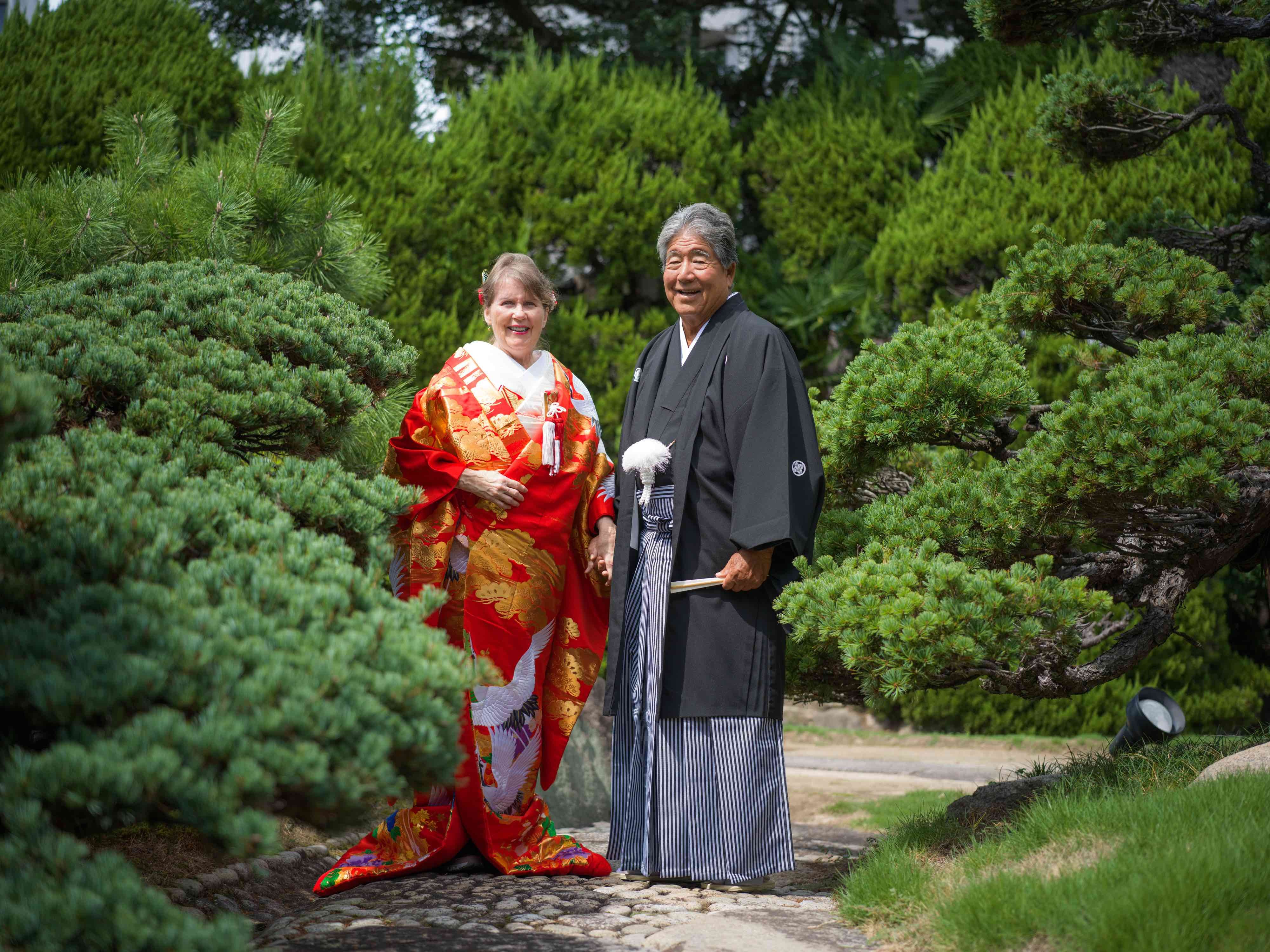
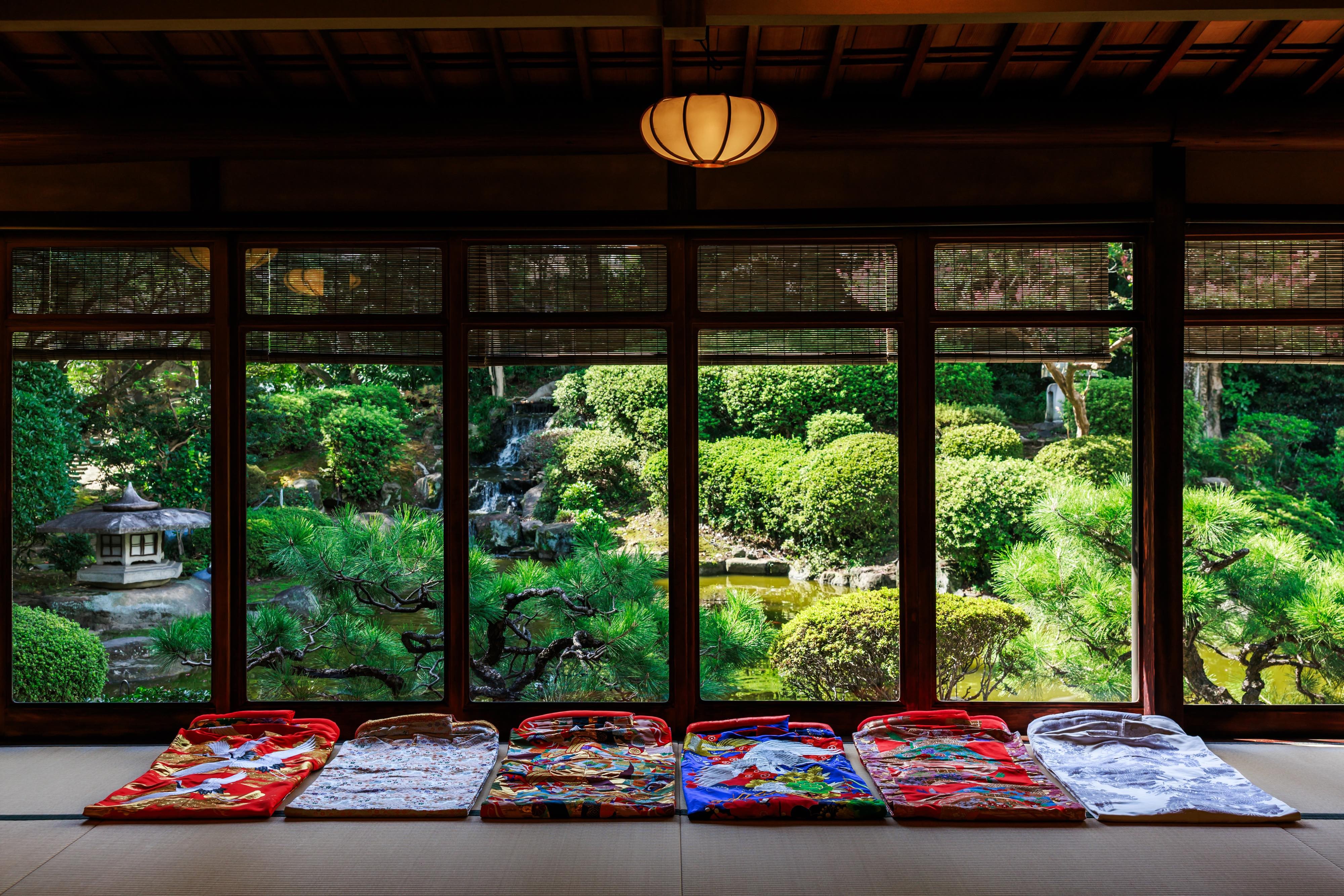
A special moment in Hiroshima where tradition, love, and irreplaceable memories are beautifully harmonized, in a unique Japanese house and garden, where you can experience traditional Japanese wedding attire and learn about its meaning. A ceremony to reaffirm the bond between you two, accompanied by a dedicated guide and photographer.
【Highlights】
While admiring traditional Japanese houses and beautiful Japanese gardens, you will wear an authentic wedding kimono and be guided by a dedicated guide who will explain the meaning and history behind its patterns, colors, and shapes. Unlike Western clothing, a single piece of fabric is tied to the body with strings.
This is a cultural experience that goes beyond simply "wearing" a kimono, offering deep learning and profound emotion.
【Itinerary】
Meeting → Guide explains wedding attire and accessories → Dressing → Photo shoot → Exchanging messages
【Details】Traditional Kimono Patterns and Meanings
Kimono are used as attire in traditional Japanese weddings. Kimono have many traditional patterns, each with its own hidden meaning. For example, cranes symbolize longevity and happiness, and pine trees symbolize unchanging love. Plum blossoms, which bloom after enduring the harsh winter, are considered symbols of perseverance and hope. These patterns are believed to bless the future of the bride and groom on the special day of their wedding and bring good fortune.
Meaning of Traditional Japanese Accessories
Wedding attire includes the following five traditional Japanese accessories. Each has a deep meaning.
Kaiken (dagger): A small dagger used for self-defense to protect the bride, symbolizing a prayer for safety and well-being.
Hakoseko (small box): A small box for holding small items, symbolizing a woman's thoughtfulness and wisdom.
Suehiro (folding fan): A fan, said to bring prosperity and good fortune, hence the name "Suehiro" (meaning "ever-expanding").
Obijime (sash cord): A cord used to support the obi (sash), symbolizing the strength of the bond between husband and wife.
Kakaeobi (folding sash): A sash used to securely fasten the kimono, signifying stability and support.
The Kimono Dressing Process
Unlike Western clothing, dressing in a kimono involves fitting a single piece of fabric made from bolts of cloth to the body. It is fastened with a single cord to ensure a fit for any body type. The kimono is tied with a wide piece of cloth called an obi, which supports the entire garment, and then the obi-jime and obi-age are used to complete the look.
The dressing process is done while looking in a mirror, and each step is explained carefully as you go along.
The guide will explain the history of the shooting location in detail. Haneda Villa has a long history and tradition. Not only will you be photographed in kimono in the house and Japanese garden, but every moment you spend talking together and holding hands will become a lifelong memory.
Message
Finally, expressing your feelings for each other in a few words and attaching them to the photos will make the memory even more special. This allows you to preserve your feelings of gratitude for each other in a tangible form.
INFORMATION
- date
- Every day except Tuesdays
- Start time
- Meet at 9 o'clock
- Target age
- 18 years or older
- Travel time
- 3 to 3.5 hours
- Number of participants
- 2 people
- price
- 308,000 yen (Price as of October 2025)
- Meeting place
- Haneda Villa
- address
- 8-40 Funairi-cho, Naka-ku, Hiroshima City
- Phone Number
- 082-96-6858
- email address
- tintcolor.tokiroku@gmail.com
- Website
- Supported Languages
- English
- Number of parking spaces
- 4
- Parking fee
- free